Showing posts with label India. Show all posts

Friday, June 19, 2026

Washing day


Continuing my fascination with India I want to share the washing day image. Everywhere we went where there was a river - there were woman and some men washing. Beating rolled wet clothes to a pulp almost, this water washes bodies, food, cooking pots and clothes, sheets, towels, saris and more.
Every white piece of fabric was whiter than white, and these mum's didn't have a Whirlpool!
I asked a woman I met there if she owned a washing machine: "Yes, I do, but after I use the machine, the house help takes the clothes to the river - the machine just doesn't clean the clothes as well." See these lovely clean clothes in the picture.
The other shot was of a sweat little bird poking out of a hole in the wall of the big temple in the palace at Mysore.
(Thai International Airways flew me to India, to Chennai via Bangkok.)

India revisited


When you have a blog, the worst thing you can do is not update it regularly - at least twice a week - so I have severely reprimanded myself - it's been pretty hectic in my life/work/deadlines/writing/subbing/moving house - all quality problems I know, but if the blog is to succeed - I need to blog!
Thought I would drop in a few images from the trip to Southern India - it has gotten into my blood. After the trip I was exhausted - and it was because it was my first trip to that amazing country and the overwhelming aspects drained me. But now fighting fit again, it is itching me, and my mind keeps returning . . .

Wednesday, November 28, 2018

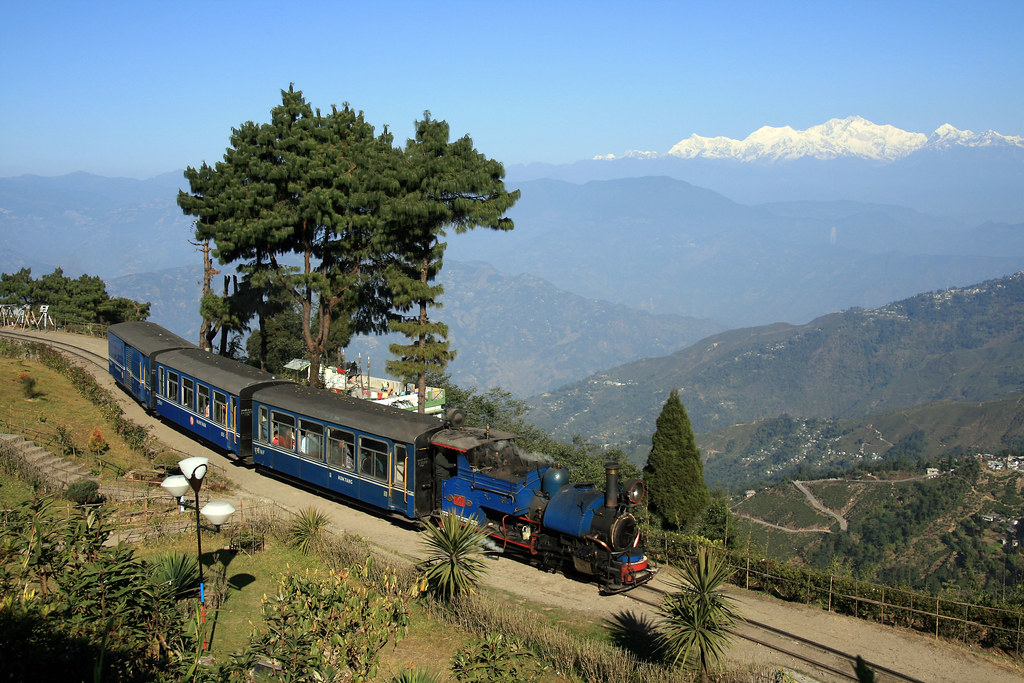
High in India - A steaming Darjeeling


For more than 130 years, a tiny train has laboured up from the plains of West Bengal to the lofty Himalayan tea plantations. Follow the tracks of the famous ‘toy train’.

words and pictures by Roderick Eime


“One steps into a railway carriage which might easily be mistaken for a toy, and the whimsical idea seizes hold of one that one has accidentally stumbled into Lilliput.” - Lawrence John Lumley Dundas, Earl of Ronaldshay (1876-1961)


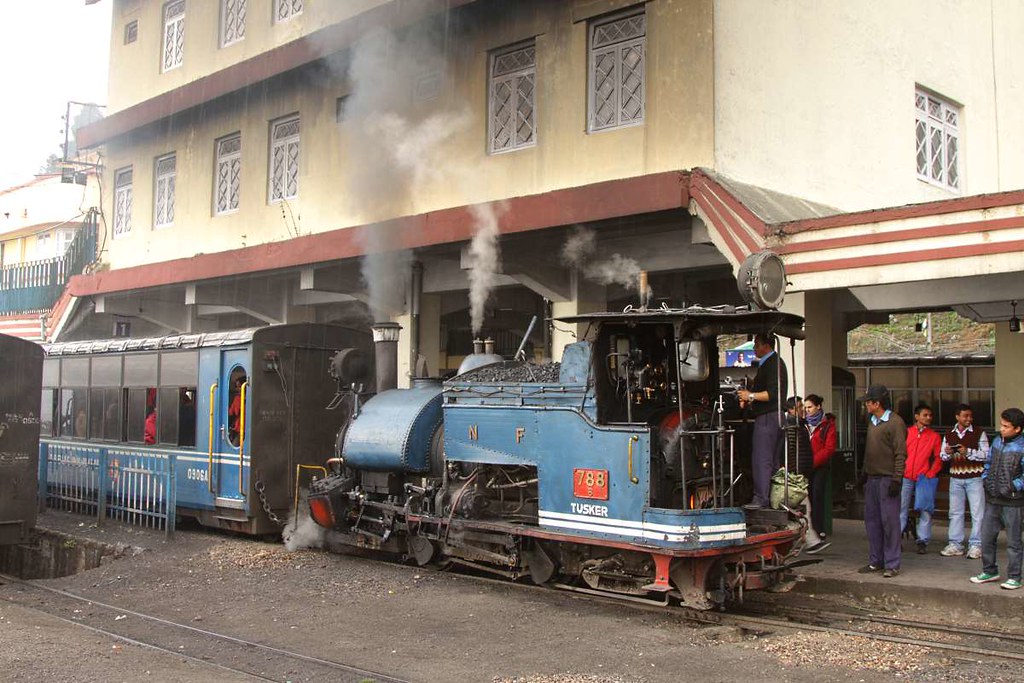
A scalding jet of steam erupts like a geyser, sending a violent plume of vapour towards the sky. The hot burst is quickly followed by a shrill, musical whistle as the ageing mechanism is urged into motion.

Here at the historic station of Ghum, a remote hillside town hanging precariously from the sheer cliffs of the Darjeeling Himalayan range at 2200 metres, the tiny steam locomotive begins the final leg of the 88.5-kilometre journey into Darjeeling.

The little train will drop 200m as it travels the final seven kilometres, past the poignant war memorial, skirting steep tea plantations and rolling within arm’s reach of windows and doors along the way before arriving into its terminus.


First published in Get Up & Go Summer 2015

The so-called ‘toy train’ is officially known as the Darjeeling Himalayan Railway (DHR) and was completed in 1881 by Gillanders Arbuthnot & Co. Ltd. after a gruelling two-year construction that was necessary to serve the burgeoning tea industry and reduce the growing cost of road maintenance along the original route down to Siliguri in West Bengal.

For the task, eight darling little steam engines haul the miniature carriages up the line. The carriages consist of first and second class and can only be described as basic. Sorry, there is no refreshment trolley and only a first class toilet on the Kurseong service.

Over ensuing years, the line was continually improved. At its peak in the 1930s and ‘40s, annual passenger numbers exceeded 300,000 but motor transport had begun to erode the railway’s revenue and monopoly.

Yet, despite the fast-approaching obsolescence of the coal burning transport, the train seized the hearts of all those who have travelled on it and in 1999 the DHR was inscribed by UNESCO onto their list of World Heritage citing ‘Outstanding Universal Value’.

In the 1969 Bollywood film, Aradhana, featuring the soon-to-be megastar, Rajesh Khanna, and co-star Sharmila Tagore, the main musical number, "Mere sapno ki rani", was beautifully shot along a section of the railway, perfectly showcasing the magnificent scenery of the Himalayan region.


While the DHR is largely preserved in its original splendour with 13 vintage stations and platforms along the route, the passage of time has dealt the railway some blows. Earthquakes, landslides and political instability have disrupted the line from time to time. A landslide at Pagla Jhora in mid-June of 2010 cut the track, effectively isolating the upper portion of the line.

Modern diesel locomotives were introduced in 1999 and these operate the 24 kilometres between Kurseong and Ghum, while the antique steam locomotives (so-called ‘joy trains’) complete the last seven kilometres to Darjeeling. Repairs are ongoing and it is hoped the line can be fully restored this year.

Visiting the delightful towns that dot the old Hill Cart Road is as much a part of the experience as the tottery train ride itself.

Historic Kurseong, thought to mean ‘place of the white orchids’, is a perfect place to break your journey with an overnight stay at one of the classic residences like Cochrane Place. This preserved heritage ‘resort’ features its own specialty restaurant, Chai Country. Teetotallers rejoice, because tea is in abundance with 30-something blends to complement the superb authentic cuisine and comfort food menu.

Cochrane Place is also the ideal base from which to explore the local tea plantations like Ambootia and Makaibari, both of which welcome visitors. At Makaibari, where organic teas are a specialty, you’ll find the world’s most expensive tea, the Silver Tips Imperial. A steal at $400 per kilo.

Darjeeling, the line’s original objective is a bustling town of some 130,000 people located at an elevation of 2050 metres. Even though the tea trade is still a major part of the region’s economy, tourism now rivals the agricultural harvest, drawing thousands of international visitors annually.

Accommodation in Darjeeling is of a higher standard than neighbouring towns, with the luxurious Mayfair Resort opposite the Governor’s House catering to both international and discerning Indian guests.

Despite the onward rush of technology in our rapidly globalised world, some things remain steeped in the past and exist purely to delight and entertain us with their old-fashioned charm. Long may this little train toot and teeter along the narrow tracks of the glorious Himalayas.


==============

FACT BOX (source: dhrs.org)

At time of writing, upper section trains were running between Kurseong and Darjeeling only due to track repairs.

Later in 2014, a special weekend-only ‘Red Panda’ first class steam service is planned between Kurseong and Darjeeling.

Mountain Railways of India (UNESCO) http://whc.unesco.org/en/list/944

For tours in Darjeeling and West Bengal, including the DHR, contact:

Active Travel 1300 783 188 or see www.activetravel.com.au


- the writer was a guest of Active Travel (www.activetravel.com.au)

Roderick Eime just loves all kinds of strange and fascinating transport. Follow him on Twitter @rodeime

Sunday, December 6, 2015

India's flower power


In his continuing search for the more weird and wondrous in this world, Get Up & Go contributor David Ellis says that next time you’re working on the flower vase, give a thought to the Mallick Ghat Flower Market on the banks of the Ganges River in Kolkata (Calcutta as most of us still think of it.)

Because here in the biggest flower market in Asia, something like 2500 vendors a day trade fresh-cut flowers by the hundreds of kilograms… some 1500-plus tonnes in fact, brought in daily from farms 60kms or more out of town.

Name a warmth-loving flower and you’ll find it at Mallick Ghat… travel writing colleague Roderick Eime who was there just recently discovering the markets to be a fascinating if chaotic 15- to 18-hours a day of frenzied bidding, bargaining and bustle as vendors and buyers haggle over prices.

Flower buyers and sellers mingle in a sea of colour (R Eime)
And almost cry as you learn that marigolds change hands from as low 60 rupees (AU$1) for a one kilogram bunch, 25 cut roses for just $3.50, wedding garlands a measly 400 rupees ($8) – with equally eye-watering prices for everything from sweet peas and sunflowers, to orchids and gladioli…

But Roderick warns that while Mallick Ghat’s certainly worth a visit during a stay in Calcutta, be ready to splash around a muddy calamity under-foot, and to be constantly jostled amid the competitive crowds. As well, being right alongside the sacred Ganges, prepare too for the sights of the faithful undertaking everything in the holy waters from religious bathing and washing to other activities normally reserved for the bathroom.

It’s all, Roderick says, something of an assault on the senses, with the fragrant perfume of those tonnes of flowers, competing with the ever-present aroma of one of India’s busiest, most densely populated and over-crowded cities.

The writer was a guest of India specialists, Active Travel

Visit: www.incredibleindia.org